
On Saturdays I talk. I talk a lot, and almost all of it is about beer. I run three brewery tours back to back, showing guests around Brewpoint and explaining to them the brewing process, the company set up and the beers we brew. Each tour is around a hundred minutes long and groups can be anything up to fifteen people. It’s a lot of fun and I very much enjoy doing them, but five hours of non stop beer chat is really quite intense. By the end of the day I am tired, often hoarse and always thirsty.
Once I’ve driven home I slump down on the sofa for dinner and a film or two. It is the start of my weekend and I am ready to relax. But one thing I have always struggled with at this point is what sort of drink I want. It is a curious predicament to find myself in. I want it to be alcoholic, I want the gentle easing of the weight of the day from my shoulders, I want that mellow buzz that a cup of tea just can’t provide. I generally want it to be beer, as that is really my main drink of choice (no surprises there, dear reader). But at the same time I am completely beer fatigued from a whole day explaining hop varieties, packaging types and the plight facing brewers and pubs in the 21st century to punters. I don’t want to drink anything that requires me to think. I want something that provides a full stop on the working week and that says to my brain ‘this is your time now’. Since my whole job is built around beer, finding that perfect choice has proven to be very difficult. But within the last year or two I have finally found my preferred type of beer to drink at the start of my weekend.
I drink an ice cold premium lager directly from the bottle.
At this point you are shrugging your shoulders. “So what” your thinking. Half the working population drink exactly the same thing when they finish toiling for their pay. Bottled premium & world lagers are one of the biggest categories of beer there is. Why does this warrant a mention, much less a blog post? The reason is because despite all this, the joy of sipping on a cold brewski from the bottle is kind of a new phenomenon for me.
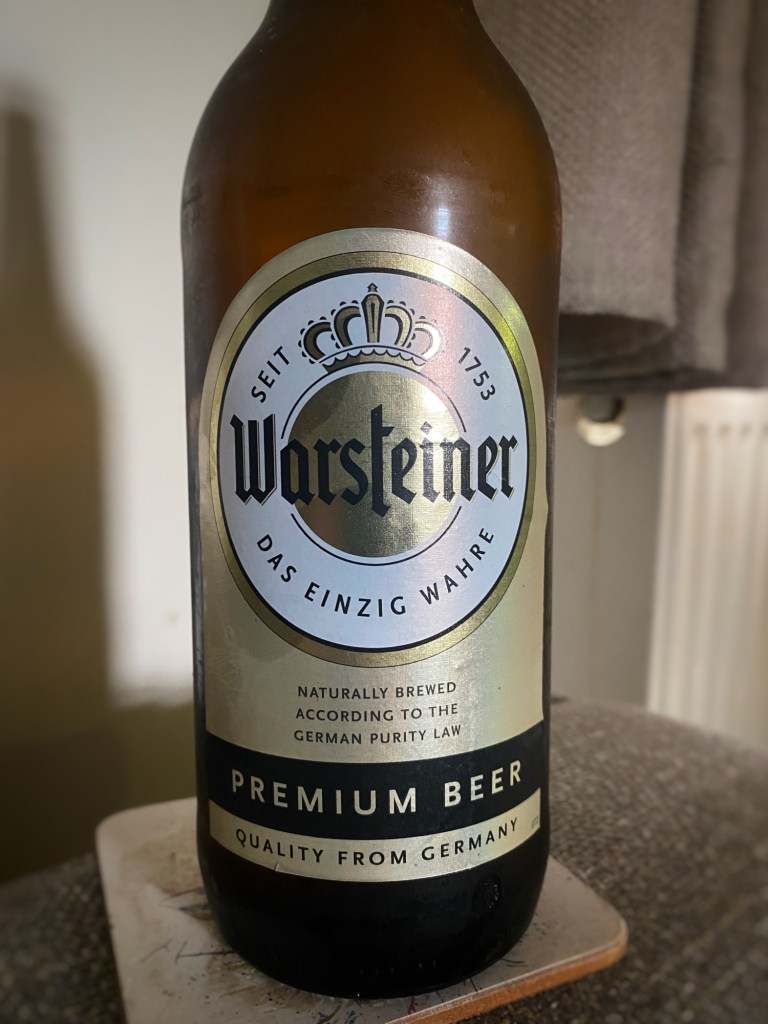
I’ve always been a beer drinker but I’ve never really done the whole drinking lager from the bottle thing, bar the odd family bbq or wedding when that was the only choice. When I started on beer, aged younger than I should have been, it was budget lager that I went with, which always came in cans. Cans are usually bigger and cheaper, and bigger means more beer! The choice made itself, and that was how I drank beer (when not at the pub) right the way through sixth form and university.
My discovery of the emerging craft beer sector coincided, almost to the week, with me graduating. In the summer of 2012, I seamlessly substituted being a student as a key facet of my identity with being a beer snob, far before I knew nearly enough to be snobby about (it is a negative personality trait of mine to naturally be snobbish about other people’s tastes, it’s something I have recognised in recent years and have worked on). As is the case with most nascent “beer nerds” the adoption of craft beer fanaticism came hand in hand with the wholesale rejection of macro lager. Almost overnight I went from someone who thought Peroni was a posh boys drink, to someone who looked down on Peroni drinkers with disdain. I held that opinion, wrongly, for years. So I never really did the standard migration from budget lager cans, to premium lager bottles in my fridge. I went straight from cans of Carlsberg, to bottles of Brewdog’s Jackhammer.
In 2015 my then employer funded me to do the Beer Sommelier course, which was run, at the time, by the Institute of Brewers and Distillers. It was a brilliant course, I loved it and still use most of what I learnt in it regularly. One of the things I learnt was the importance of aroma in properly assessing a beer. Around eighty percent of flavour perception is actually derived from aroma, rather than taste. I remember clearly my tutor Nigel Sadler explaining that this meant that drinking directly from cans or bottles was cutting out a huge portion of flavour perception because your nose can’t pick up most of the liquid’s aromas. So from this point I made a point to never drink any beer directly from the container. The exception to this rule only ever being train beers or festival beers, which were again, always cans. Drinking beer directly from the bottle was outright disrespectful to the brewers and their craft, in my view.
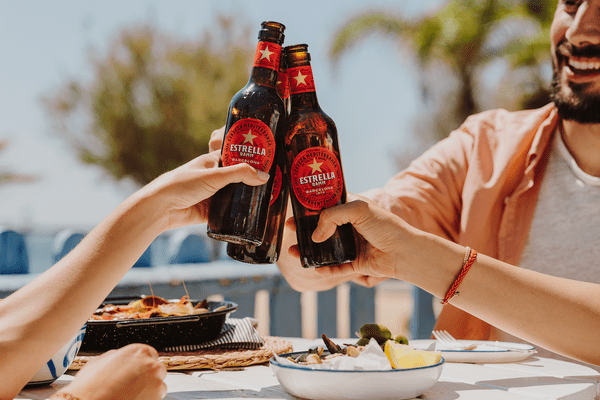
I began to get properly into lager again around 2019. But I stuck to craft lager, or respectable world lager like Budvar and Pilsner Urquell, Augustiner or Paulaner. Without fail I continued to hold the line, always decanting bottles into clean, correct glassware.
I can’t pinpoint the moment this changed. There wasn’t a watershed moment when suddenly my mind was switched. But sometime in 2023 I must have cracked open a bottle of lager before realising no clean glasses were to hand. Maybe I’d already sat down and forgot the glass in the kitchen and couldn’t be arsed to get back up for it. However it happened, the memory is lost to the ether. But for whatever reason I drank a lager straight from the bottle and liked it? The following week, collapsing down on the sofa on once more, I did it again, and so it has continued most weeks since.
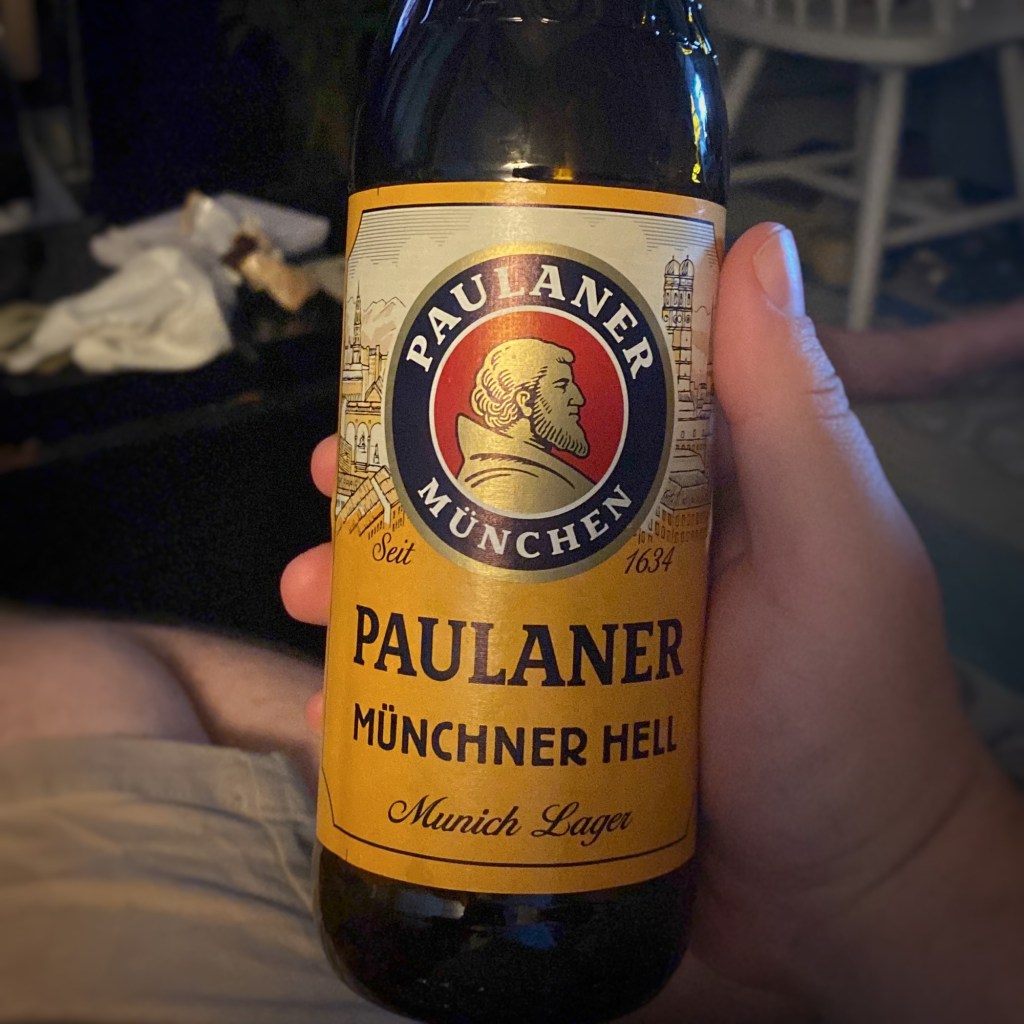
Holding a cold bottle in your hand feels nice. The thick rim of glass on your lips feels substantial, the liquid retains its carbonation longer, keeping that prickly bite beyond the first couple of mouthfuls. It’s more about sensation than flavour. Drinking from a small hole rather than a wide brimmed glass also makes me drink slower, forcing me to settle into my weekend. It takes the pace off the day.
It’s normally just one bottle, it’s normally only Saturday night. The rest of the time my drinking is much as it has been for the last thirteen years; pub preferred, pint focussed and ales generally favoured over lagers. Niche styles explored where possible and fastidiously logged on Untappd and/or Instagram. But once a week I throw expertise to the wind and just have a cold one. It scratches an itch nothing else can get to.
 Beer with Tim
Leave a comment