On the 16th December 2019 I left work two hours early, drove 120 miles, stayed overnight in a particularly cheap and grotty hotel, and then drove home in the morning for work again. I did this all to drink five thimbles of beer. The beers in question weren’t the latest hype DIPA’s though, or rare imported adjunct stouts. They were all vintage barley wines from the now defunct Bass brewery. The oldest of these five beers, Bass Ratcliffe Ale, was 150 years old, to the day.
Whilst Bass Ratcliffe Ale is by far the oldest beer I’ve ever drunk, it wasn’t my first dabble in aged beers. In my cupboard I have several dozen bottles, ranging from a couple of years to several decades old. When I come across a style that would be good to age I normally buy two or three bottles, one to drink fresh and the rest to ‘cellar’ and drink in the future, to see how it has changed. I am particularly fond of doing this with Barley Wines, as the hop character fades, the alcohol softens and usually notes of sherry, dried fruits, leather and tobacco start to develop. Often though, when I do get round to drinking them I have left them too long and they are, undeniably, past their best.

In almost all cases, beer is best drunk fresh. Letting bottles, cans or kegs of the majority of styles go even a few months past their best before will result in a flabby cardboard or vinegar tasting mess. But some more uncommon styles, such as quads, imperial stouts, barley wines and wild ales can mature and develop over time, particularly when kept in favourable conditions. Even then, most of these will be past their best within 2-5 years.
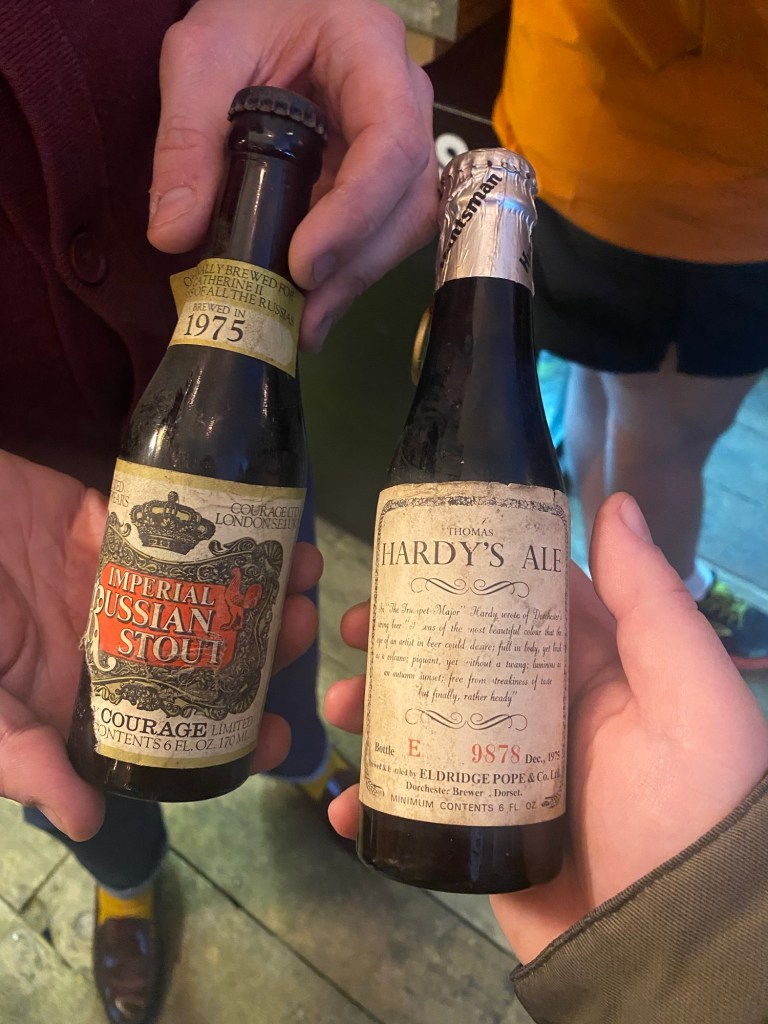
Despite knowing this and despite drinking many bottles of underwhelming oldies, I can’t help but hold onto dusty bottles in the hope that when I finally decide to drink them, the flavour will be somehow elevated by the magic of time. It rarely is, but time does impart another favourable attribute to the experience, that of nostalgia.
It is often said that good beer is as much about time and place as it is about what’s in your glass. If that is is so then vintage beer can take you, in a moment, back to a different place and time. A big sharing bottle of wild ale, bought on a summer camping holiday and kept for several years, can transport your mind to sun soaked fields on even the most grim January evening. You can almost feel the warm breeze on your face whilst you sip it. An imperial stout, given at Christmas a decade ago, can put a festive twinkle on a unremarkable Thursday night in late November, when you need a visit from the ghost of Christmas past to ready you for December. An Old Ale from before you were born can show you a glimpse of a world before you, a world you will only ever know second hand. Therein lies the allure.

The biggest clear out of my beer cupboard I ever had was in the first lockdown of the Covid-19 pandemic in spring 2020. At this time, like many other people, I found myself unemployed, without an income (no furlough for me!), trapped in my house with limited scope to leave and limited funds to spend on anything. The store of vintage beers took a battering over those few months. At the time I attributed this to not being able to afford to drink much else, but with hindsight I can see that a lot of the reasoning was to do with escapism. Snapshots of previous trips and bygone beer festivals went through my mind whilst working my way back into the depths of the cupboard. They were a much needed taste of happier times.
Vintage, or aged beers is a niche within a niche. Most of my colleagues and friends at the time of the Ratcliffe tasting were ardent beer nerds, but none of them saw the appeal of drinking decades old beers. When telling people outside of my beer circle about the trip, the whole endeavour was regarded as highly bizarre. I guess, objectively it was. But enjoying anything niche will always elicit that response.
But how did the 150 year old beer taste? My notes at the time were “deep ruby colour, musty old chocolate aroma, with long dried fruits, vinous, rich, prunes and a light roast coffee”. It had held up remarkably well and was actually one of the better old beers I have had. But that’s not really the point though. The point was that, for a fleeting moment, I tasted Victorian Britain. A world inhabited by ancestors I couldn’t even name. The age of my great great great great grandfathers. For a second I went back, smelt the coal fires of industry and touched the world before the first plane, the first car and the first telephone call. A world unrecognisable and on the brink of immense change. It was a remarkable experience.
 Beer with Tim
Leave a comment